Wednesday, 28 March 2012

Two firsts for the garden....

- a Treecreeper and using five AA rings consecutively !
Not many birds needing an AA ring have been caught in the garden in the past, so it was a bit of a surprise today when five consecutive birds had rings off the blue string - the Treecreeper, then 2 Chiffchaffs, a Goldcrest and a Wren.
A Bullfinch had started the morning off nicely and retrap Goldcrest, Great Spotted Woodpecker and Blackbird all ringed last year were good too.
The Siskins seem to have gone now.
With migration getting underway, our site in the dunes down at the Teifi estuary will now take over from garden sessions.
The marshy area that runs through the dunes is looking wonderful a the moment with the Marsh Marigolds out - an area that caught us some good early migrants last year.

Saturday, 24 March 2012

"Curlew" Tit

Having read the recent BTO blog about birds with deformities, it was interesting to catch this odd looking Blue Tit. It was a retrap, having been ringed by us in September as a juvenile when it had a completely normal beak. It was the same weight as others caught this morning so must be managing to feed sufficiently well, though the bird had moulted less coverts than expected.
A nice selection of warblers today too, including our first Blackcaps for the year, some Chiffs - one Chiffchaff - CNP216 was ringed as an adult in June 2009. Also nice to ring a new Cetti's Warbler, Cetti's singing from the usual five territories.

In Ffynone wood, a new project for the group this week was to help some local children put up nest boxes that they had made. This was organised by Kate from Growing Heart Workers Co-operative as part of their aim to make it a community woodland.This wood is the site of the first record of breeding Pied Flycatchers in Pembrokeshire. They are seen here every spring but no recent breeding records so hopefully the boxes will be successful. The wood has some good areas for a potential new ringing site.

Sunday, 11 March 2012

Snow in March !

Small numbers of Snow Buntings are regular winter visitors to the man- made breakwater at Fishguard.
The female above was one of three seen in November 2011. From other photographs taken and monthly WeBS counts there do seem to be different birds using the breakwater. The answer to the question of whether they are wintering or passage birds and from where, came a step closer today when we caught the first of what is an ongoing project with permission from Stenna Line.
This was a first year male of the ssp nivalis. Mike Young-Powell was with us today as he has a special interest in Snow Bunting races and led to some interesting discussions as we watched the birds. We suspect that one of them was a male of the Icelandic ssp insulae.
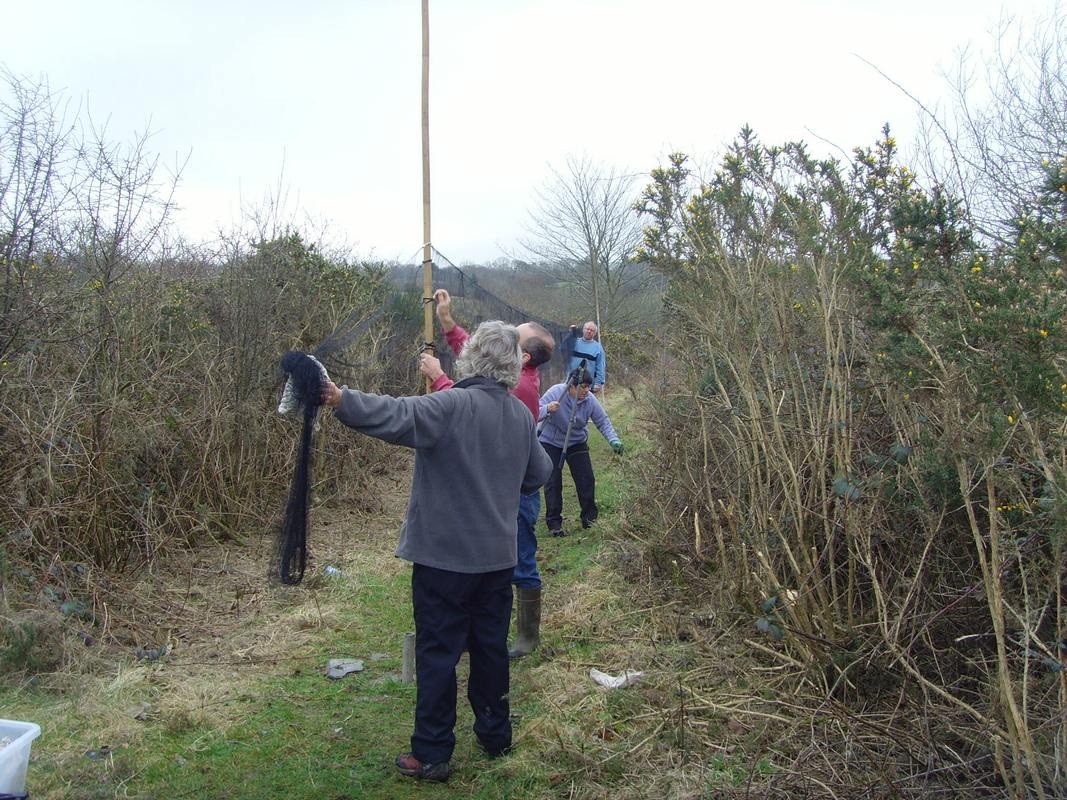
Yesterday we had a good morning on the reserve checking nets and tidying net rides ready for the CES season ahead.
The first Chiffchaff of the year was the highlight of a few birds ringed.

We are grateful for the continuing support of Environment Wales with funding from the Welsh Government. The grant enabled us to purchase some tools which were put to good use yesterday.
Also the funding of a digital projector has been a great aid for talks about ringing that we have given to local groups.

Tuesday, 6 March 2012

Site faithful in the garden

Site faithful wintering Reed Warblers a memory in Uganda, so back to West Wales.
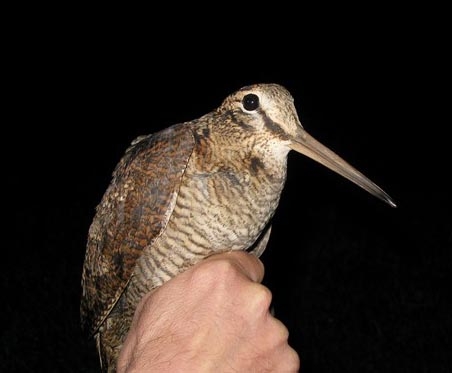
Back in the garden and 0f 48 Siskins caught, 3 from last winter. On top of the hills, 78 new Woodcock caught and 6 retraps.
Wendy is giving a talk, " An introduction to bird ringing - the Teifi and beyond" tomorrow in Cardigan, our AGM on Thursday...Mist net fitting in the Marsh rides on Saturday....Let us get ready for Spring, 2 Sand Martins were over the Marsh on March 1st.. !!

Wednesday, 29 February 2012

The Magic Garden

An unbeatable view of Lake Victoria from the ringing table!
We were privileged to spend some time at the beginning and end of our journey at this special garden warmly welcomed by Roger and Kathy.

Not many gardens can boast thirteen species of sunbirds like this Collared Sunbird
and Green-headed Sunbirds.
Not just small birds either - African and Eurasian Hobbies were overhead with numerous Black Kites. Both Shikra and African Goshawk were caught.
Splendid Glossy Starlings were coming to the bird bath but were far more challenging to catch.
but we did!Although we caught lots of colourful birds like this Brown Twinspot
even more fascinating was finding out that a recaptured Reed Warbler was ringed in the same garden in January 2011. The oldest retrap though was a Dark-capped Bulbul which Malcolm ringed in the garden in October 1997. Over 14 years old!
Reluctantly we came to the end of our trip but not without a couple of nets being put up in another garden on the way to the airport.
The poles being unloaded for the last time ......until next year??
This Woodland Kingfisher was nearly our last bird ringed but was not interested in the mealworm on our springtrap. We could have waited a bit longer but Richard had to pack the springtraps in his luggage clean and tidy for the benefit of customs!

If our recent postings from this three week ringing and birding expedition into the heart of Uganda has excited you then contact Malcolm Wilson ( shoebill@mweb.co.za) about future trips. Also have a look at his blog, African Affinity, for trip reports.

Friday, 24 February 2012

Whose claws are these??

Leaving Bwindi early we headed back up to Queen Elizabeth Park to look for raptors again.
We caught Western-banded Snake Eagles
and Long-crested Eagles. Note that one of the crest feathers is still in pin.
While those ringing are focussed on the bird, one of us always had an eye out for wild animals like approaching buffalo.
There was plenty to see as we drove around. This Topi was probably a lion kill with a Ruppell's Griffon Vulture and White-backed vultures fighting over the carcass.
The highlight of the day was, without doubt, a stunning young Martial Eagle. That is the bird who the massive claws belong to in the top picture. Those feet definitely needed a firm grip on them!
The sight of it flying off was one we will all remember.
It was dark by the time we headed back to Ishasha Wilderness camp after enjoying a stunning sunset over the Savannah.
No time for mist nets here but Richard and Nathan were up for a 4am dazzle. They caught some Square-tailed Nightjars.
With the chance of lions nearby, dazzling had to be from the vehicle, no wandering about at night on foot in this part of the country.
Back to the real world and our nights of lamping are continuing in wet and windy Pembrokeshire. This week we have caught Snipe, Golden Plover, Fieldfare, Redwing, Meadow Pipit and last night, our 70th Woodcock of the season.

Tuesday, 21 February 2012

More Gorillas than birds!

Reluctantly leaving the forest, we set off south for Queen Elizabeth National Park, crossing the equator on the way. As always, the raptor traps were ready to stop at any moment for a hungry bird along the road.
This juvenile Bateleur frustrated us for an agonising half an hour as it sat next to the trap looking at the mouse but eventually flew off!
Our overnight stop in the park on the Kazinga channel was too brief to get rides cut and nets up although we were tempted as there were numerous Reed Warblers singing from the scrub.
Another early start to target Long-crested Eagles on the way to our next stop in Bwindi Impenetrable National Park. We soon had a net up in the Buhoma Lodge garden and ringed the birds in luxury from the bar with an interested audience!
Birds ringed included White-eyed Slaty Flycatcher - the race in Western Uganda doesn't have an eye ring!
Black-necked Weaversand Chubbs's CisticolaAlso Olive-bellied Sunbird, Veillot's Black Weavers and an African Pied Wagtail.
Our main purpose here though was to hike through the rain forest to see Mountain Gorillas.
We spent a fascinating hour with them and returned exhilarated and ready to set off on the road again. Not exactly ringing but the blog wouldn't be complete without paying respect to our closest relatives. Some more gorilla pictures here and a short video of a heart stopping moment.


Next in the story, more raptors in the park and how to dazzle Nightjars in lion country!.