We are a group of bird ringers based on the North Pembrokeshire and South Ceredigion border at the Teifi Marshes near Cilgerran, also North Carmarthenshire. Stories of our members ringing experiences home and away
Wednesday, 7 October 2015
Teaching starts with a Tinamou
Another amazing start to a banding session here in Costa Rica.!!!
A young Great Tinamou, though the actual identification was confirmed from photos later.
The morning at Cano Palma continued with a good mix of residents and migrants. This is one species often heard in the forest..Chestnut-backed Antbird. This an adult male.
Another adult male of a species not often caught was this aptly named White-flanked Antwren
This next bird is also a male but just a few red feathers give the clue to the final bright red head plumage of an adult male Red-capped Manakin
With several keen volunteers at Cano Palma the morning was a good teaching opportunity. Learning points for all of us when it comes down to the finer points of Empidonax Flycatcher identification.
The bird here was an Acadian Flycatcher
At our base at the Sea Turtle Conservancy today a morning of teaching again in a temperature of 32.5 by the end of the session.
Bea from Chile here banding a Swainson's Thrush.
More migrants than residents banded here today with Veerys, Swainson's Thrushes, Traills and Acadian Flycatchers, Prothonotory, Kentucky and this Chestnut-sided Warbler.
Of course the days aren't just about birds. Just a few of the many other creatures seen in the last couple of days...
Bats at Cano Palma - these usually live in the boat dock but have moved to a nearby tree after having young
a Blue Morpho butterfly just emerged in the toilet!
a colourful Grasshopper extracted from one of our nets
One of the many Cayman that live in the canal by Cano Palma station..
and back at our base in Tortuguero our night security guards are experts at finding creatures of the night. Thanks Alfredo! This is a Red-eyed Tree Frog
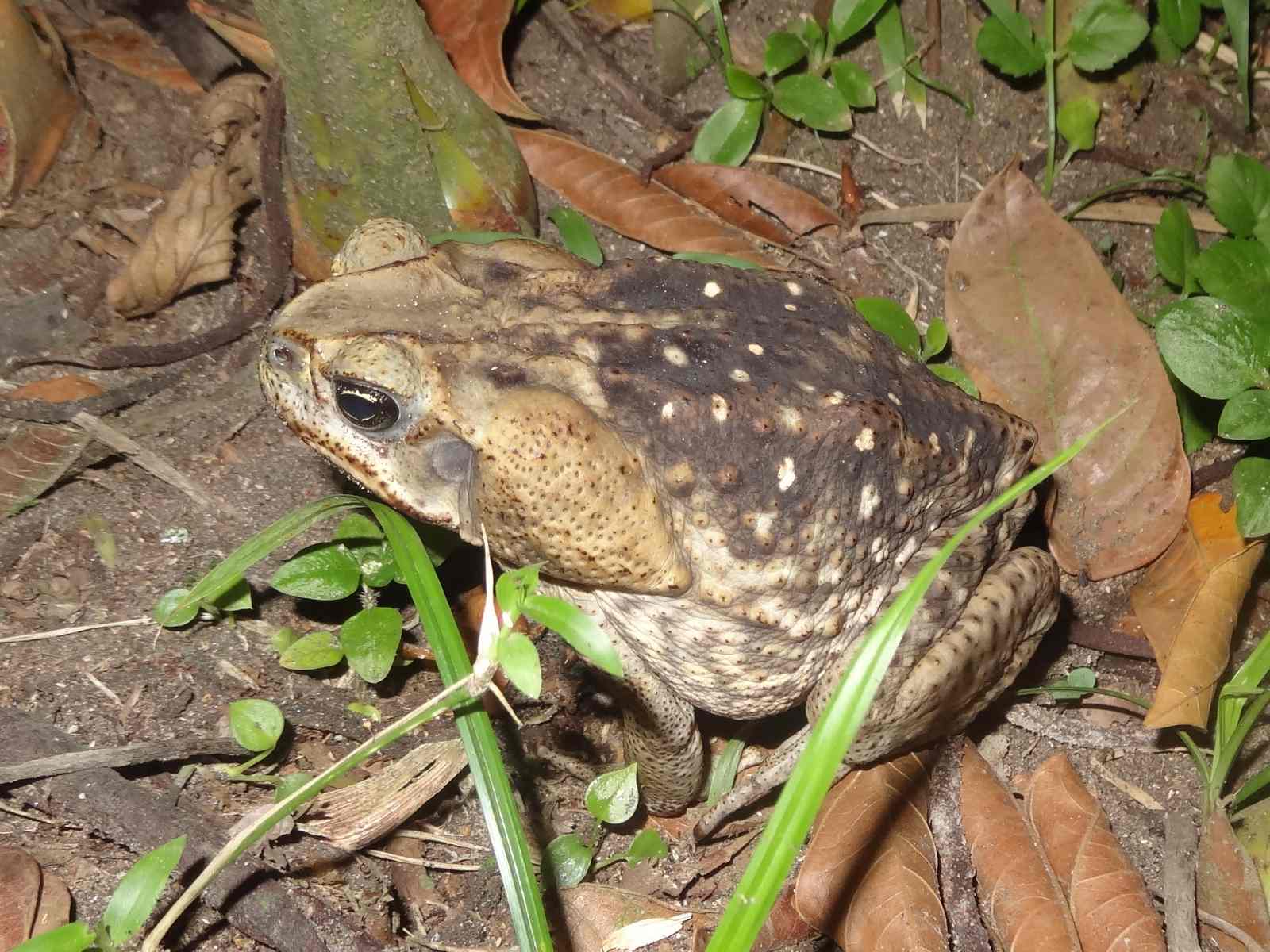
and this is a huge Cane Toad
A change in the weather tonight with a big thunderstorm. Hopefully it will be dry by the morning for a visit to our site near the airport. This Bare-throated Tiger Heron is often by the boat deck when we leave by boat to travel to our sites.
Tuesday, 6 October 2015
Sora in the... Street....!!
A 5am walk along Tortuguero high street on route to Parq - our banding site for the morning.
Something on the road in our path caught my eye....
A slight movement, the flicker of an eyelid and I quickly picked it up. By now the penny had dropped - an exhausted rail...hold on - I am in Costa Rica - an exhausted Sora Rail !!
A photo of the high street taken later.
Wendy and Debra were with me, a quick show to them and the bird was put into a bird bag to rest, ....and hopefully revive.
With the banding site opened, time to see if our rail was in a better condition. We were amazed to find the Sora was full of life.. pectoral muscles felt good, score 2/3.
A weight of 58g.- S & Sutch quote 65g, so the bird seemed in good shape., with wings moving well.
We aged the Sora as an adult.......and off the rail flew then ran into the wet forest site.
Quite an amazing walk to the site, unlike the previous three, each of which involve carrying eight newly cut bamboos for net poles.
On to banding...this first year female Canada Warbler, a nice one to catch as feather samples are required from this species to determine the origins of the population.
This Mourning Warbler, only our fourth, an adult female.
The favoured habitat of our Kentucky Warblers is our primary forest locations with denser and wetter understorey
One of our wide spread residents, spreading into regenerating forest is Western Slaty-Antshrike. This is an adult male...
The variety of insects we see is outstanding and most are as yet unidentified by us. Suggestions welcome! This colourful one seemed to be feeding on banana leaves.
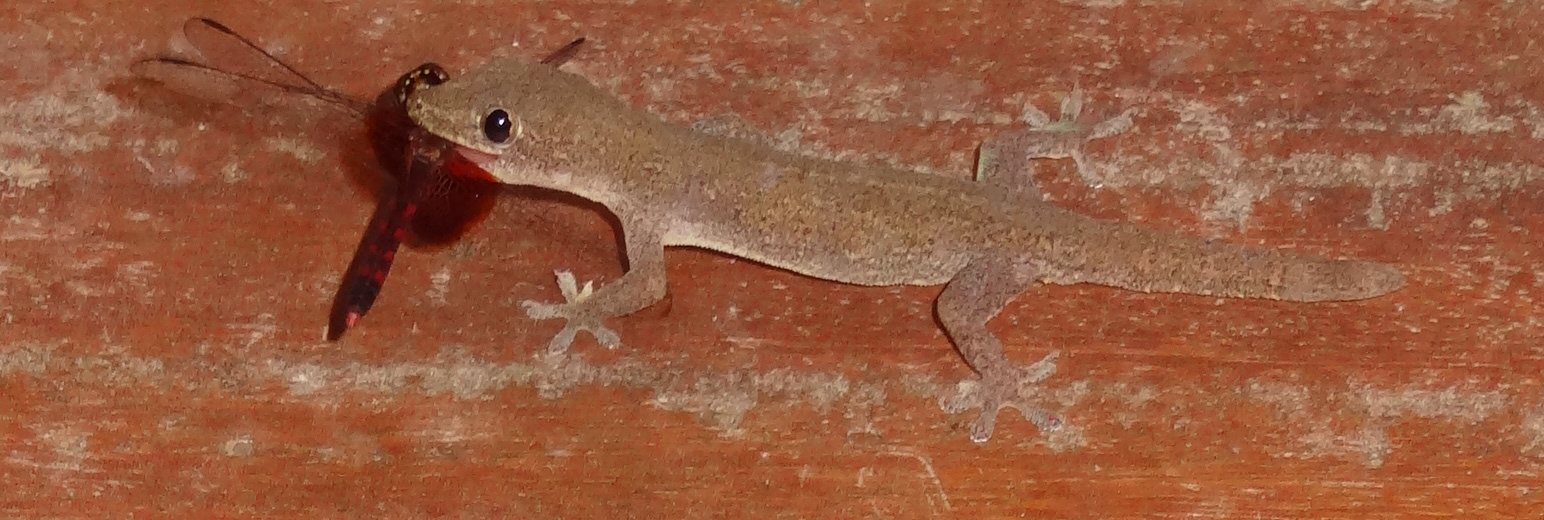
Other wildlife is familiar to us like this House Gecko that chose to eat a mystery Dragonfly that Wendy was trying to photo!
We often have research assistants from our host bases helping us but we also have eco volunteers who are not researchers but who wish to give their assistance to the project for a short period. This week we have Debra from Pennsylvania assisting us and learning about banding.
Our last migration count of every day ends as the sun sets across the Tortuguero canal from our boat dock. Herons, Montezuma Oropendolas, Vultures, Swallows, Parrots and Nighthawks are some of the birds we see at this time of the day.
Something on the road in our path caught my eye....
A slight movement, the flicker of an eyelid and I quickly picked it up. By now the penny had dropped - an exhausted rail...hold on - I am in Costa Rica - an exhausted Sora Rail !!
A photo of the high street taken later.
Wendy and Debra were with me, a quick show to them and the bird was put into a bird bag to rest, ....and hopefully revive.
With the banding site opened, time to see if our rail was in a better condition. We were amazed to find the Sora was full of life.. pectoral muscles felt good, score 2/3.
A weight of 58g.- S & Sutch quote 65g, so the bird seemed in good shape., with wings moving well.
We aged the Sora as an adult.......and off the rail flew then ran into the wet forest site.
Quite an amazing walk to the site, unlike the previous three, each of which involve carrying eight newly cut bamboos for net poles.
On to banding...this first year female Canada Warbler, a nice one to catch as feather samples are required from this species to determine the origins of the population.
This Mourning Warbler, only our fourth, an adult female.
The favoured habitat of our Kentucky Warblers is our primary forest locations with denser and wetter understorey
One of our wide spread residents, spreading into regenerating forest is Western Slaty-Antshrike. This is an adult male...
The variety of insects we see is outstanding and most are as yet unidentified by us. Suggestions welcome! This colourful one seemed to be feeding on banana leaves.
Other wildlife is familiar to us like this House Gecko that chose to eat a mystery Dragonfly that Wendy was trying to photo!
We often have research assistants from our host bases helping us but we also have eco volunteers who are not researchers but who wish to give their assistance to the project for a short period. This week we have Debra from Pennsylvania assisting us and learning about banding.
Our last migration count of every day ends as the sun sets across the Tortuguero canal from our boat dock. Herons, Montezuma Oropendolas, Vultures, Swallows, Parrots and Nighthawks are some of the birds we see at this time of the day.
Sunday, 4 October 2015
Long-lived Long-tailed Tit
Yesterday on the Teifi Marshes Reserve I trapped a Long-tailed Tit that was ringed as a full-grown bird at the same site on 28th September 2008, so a few days more than seven years from first ringing, and the first recovery of this bird since June 2011.
According to BTO Ringing Recoveries data, the UK longevity record from first ringing is 8 years 11 months, and there appear to be only six records of birds older than ours. Typical lifespan is said to be two years.
Saturday, 3 October 2015
Hooded, Kentucky...and forest creatures
Warblers are here.....
This juvenile female Hooded Warbler is our 3rd in four Fall seasons, and our first away from our Cano Palma site, Kentucky Warblers are far more numerous and maybe a winter resident ?
A change in the wind and some rain this evening, we are hoping - and expecting an upsurge in variety and numbers in the morning...
Our first Swainson's Thrushes this morning - with 7 captures. More no doubt tomorrow
This adult female Green-breasted Mango. The first that we have captured at a Tortuguero site.
Yesterday, our first visit of the season to Cano Palma and we were greeted with enthusiasm by the team based here, another multi-national.... and multi-lingual challenge !
This Chestnut-backed Antbird ---the best, and barely out the nest.
Immediately banded and released, the adult male a retrap was captured too.
This Streak-headed Woodcreeper, is the lowland relative to the commoner Spot-crowned Woodcreeper that we find in the Highlands..
Cano Palma....one of our best sites for frogs...
But at our Aero site this morning there were many lizards including this one with a blue tail that we still have to identify.
This rather large bodied stunning moth was also at our Aero - secondary forest site today
Hmmm....what species?
Many thanks to Bea fom Chile- our latest banding assistant and photographer.
This juvenile female Hooded Warbler is our 3rd in four Fall seasons, and our first away from our Cano Palma site, Kentucky Warblers are far more numerous and maybe a winter resident ?
A change in the wind and some rain this evening, we are hoping - and expecting an upsurge in variety and numbers in the morning...
Our first Swainson's Thrushes this morning - with 7 captures. More no doubt tomorrow
This adult female Green-breasted Mango. The first that we have captured at a Tortuguero site.
Yesterday, our first visit of the season to Cano Palma and we were greeted with enthusiasm by the team based here, another multi-national.... and multi-lingual challenge !
This Chestnut-backed Antbird ---the best, and barely out the nest.
Immediately banded and released, the adult male a retrap was captured too.
This Streak-headed Woodcreeper, is the lowland relative to the commoner Spot-crowned Woodcreeper that we find in the Highlands..
Cano Palma....one of our best sites for frogs...
But at our Aero site this morning there were many lizards including this one with a blue tail that we still have to identify.
This rather large bodied stunning moth was also at our Aero - secondary forest site today
Hmmm....what species?
Many thanks to Bea fom Chile- our latest banding assistant and photographer.
Thursday, 1 October 2015
Bats, Bees and C is for Catharus Thrushes
Our banding here in Tortuguero in the lowland Caribbean forest of Costa Rica is underway.
Five Veerys today, and no other thrushes. On a previous visit on these dates Veerys were the first Catharus thrush species too before the waves of Swainson's then Gray-cheeked.
The day got off to a poor start !!
First hiccup... lovely early start but the bats still flying....and two in the nets...ok....bitten but sorted.
Next...net ride 5 and disaster. Leaned the pole against the tree for a second and bees came pouring out. Not a bat nibble, but pain and and current agony from many bee stings to the head.
A couple of Prothonatory Warblers lifted the day ..
Variable Seed-eater and White-collared Manakin brought us back to Costa Rica
Both species are common here and have good moult pattens to aid teaching.
Hummingbirds too, this the wing of a Rufous-tailed.
This showing the well known Hummingbird wing moult, moulting descendantly and ascendantly around P9
A Migration Monitoring visit to the beach....
This very juvenile Common Black-Hawk, rather caught our attention, whilst counting swallows overhead.
Bea, an STC - Sea Turtle Conservancy Research Assistant photographed this Slaty-tailed Trogon whilst carrying out an area search for us too
Bea is from Chile, and more about all of our helpers as our visit progresses
Poles cut and ready for loading on our 0445am boat to our banding site at Cano Palma in the morning..
A final look at the Tortugureo Canal from our boat dock at STC, confirmed 2 Glossy Ibis coming in to roost with the herons for the third night. The local species is the Green Ibis. Also our first American Black Tern for the site....
A magical end to the day.......
(That started with bats and bees)
Photos by Bea and Wendy
Five Veerys today, and no other thrushes. On a previous visit on these dates Veerys were the first Catharus thrush species too before the waves of Swainson's then Gray-cheeked.
The day got off to a poor start !!
First hiccup... lovely early start but the bats still flying....and two in the nets...ok....bitten but sorted.
Next...net ride 5 and disaster. Leaned the pole against the tree for a second and bees came pouring out. Not a bat nibble, but pain and and current agony from many bee stings to the head.
A couple of Prothonatory Warblers lifted the day ..
Variable Seed-eater and White-collared Manakin brought us back to Costa Rica
Both species are common here and have good moult pattens to aid teaching.
Hummingbirds too, this the wing of a Rufous-tailed.
This showing the well known Hummingbird wing moult, moulting descendantly and ascendantly around P9
A Migration Monitoring visit to the beach....
This very juvenile Common Black-Hawk, rather caught our attention, whilst counting swallows overhead.
Bea, an STC - Sea Turtle Conservancy Research Assistant photographed this Slaty-tailed Trogon whilst carrying out an area search for us too
Bea is from Chile, and more about all of our helpers as our visit progresses
Poles cut and ready for loading on our 0445am boat to our banding site at Cano Palma in the morning..
A final look at the Tortugureo Canal from our boat dock at STC, confirmed 2 Glossy Ibis coming in to roost with the herons for the third night. The local species is the Green Ibis. Also our first American Black Tern for the site....
A magical end to the day.......
(That started with bats and bees)
Photos by Bea and Wendy
Subscribe to:
Posts (Atom)